

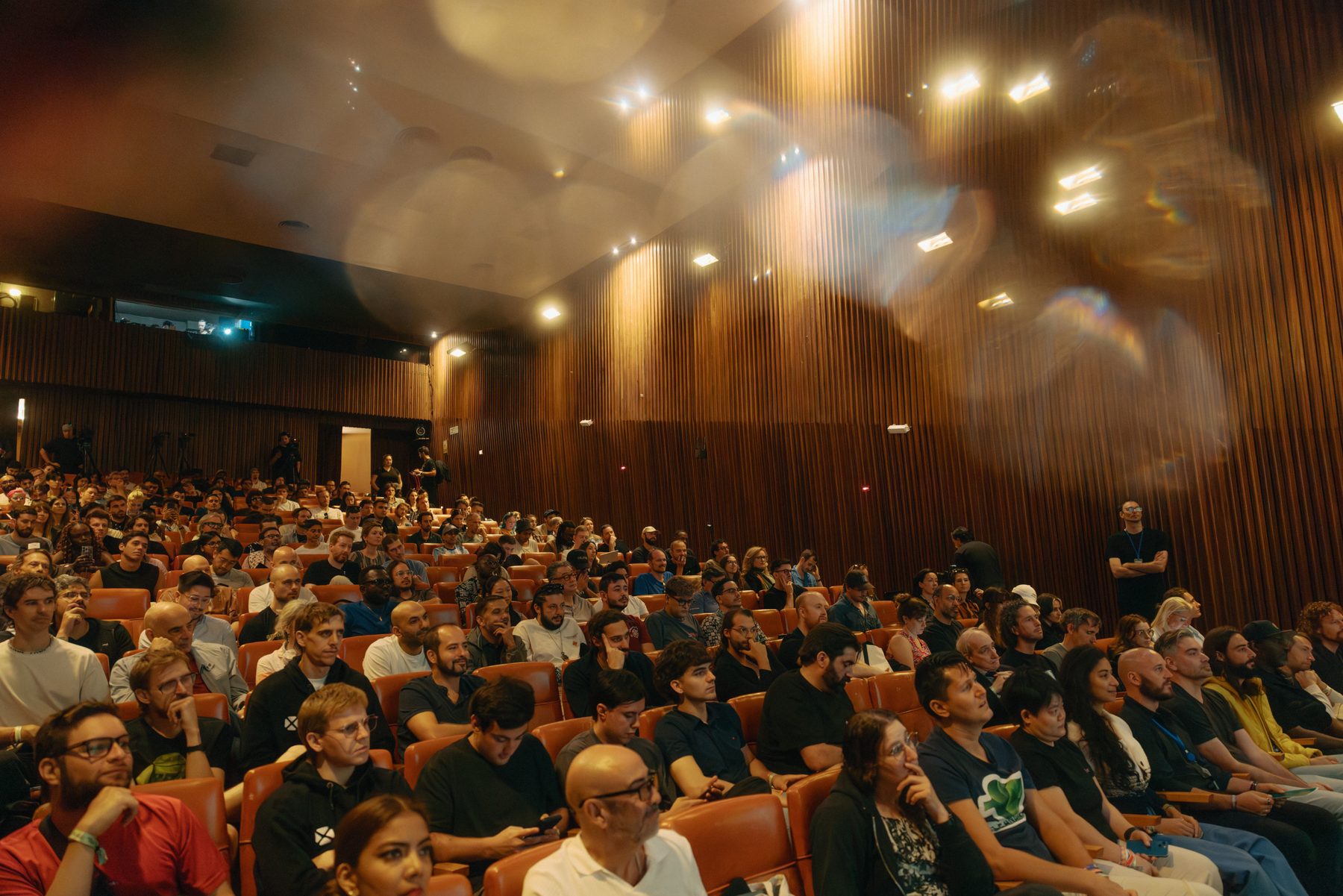
Gatherings
We bring together the people who rarely share a room, at conferences, residencies, hackathons, and curated dinners.
Funding the Commons is a global network advancing how shared infrastructure gets funded, governed, and coordinated in the age of AI. We bring together builders, funders, researchers, and policymakers, through conferences, residencies, funding campaigns, and research.
16
5
3
27
We bring together the people who rarely share a room, at conferences, residencies, hackathons, and curated dinners.
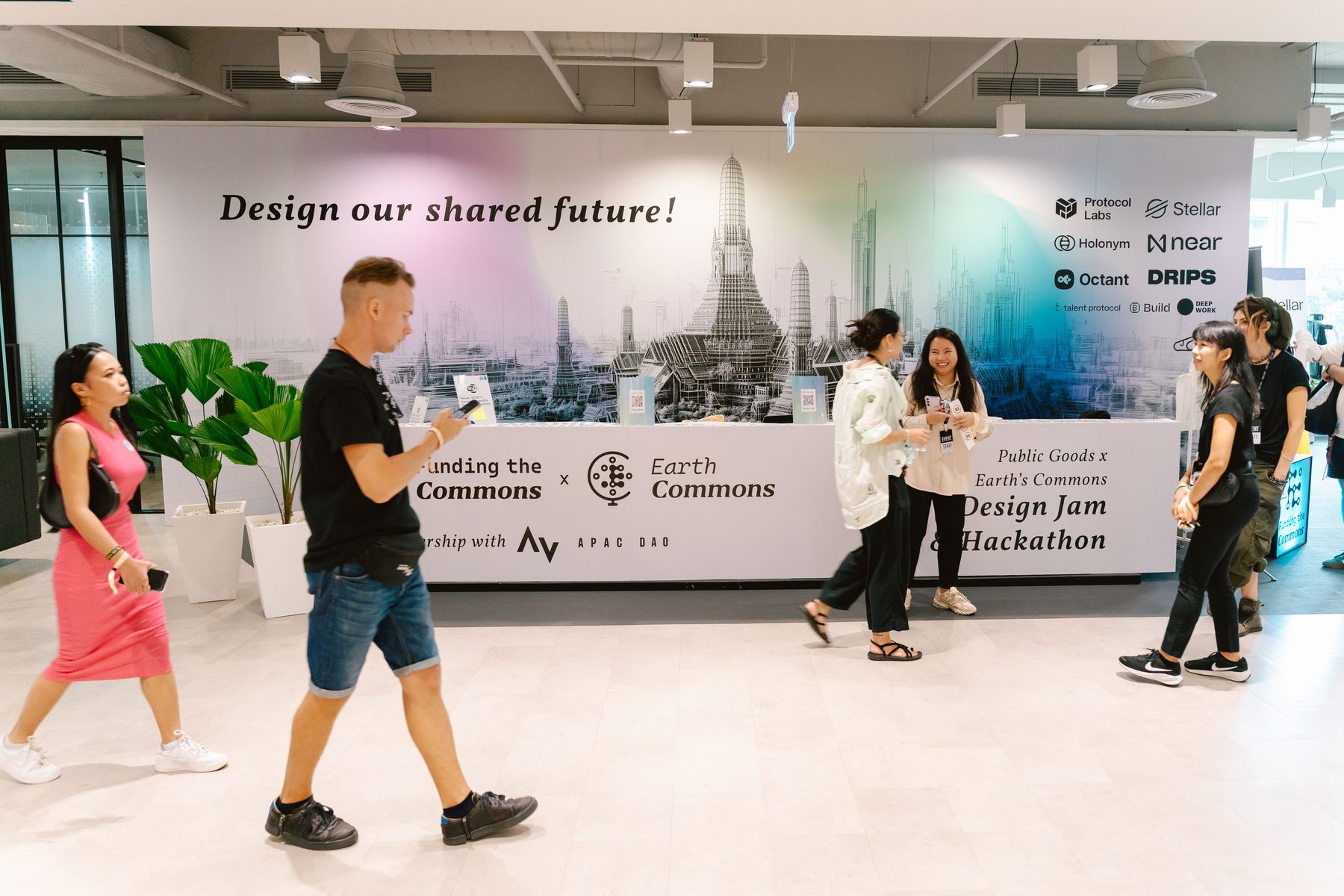
We design and run participatory funding rounds, so the communities closest to the work decide where capital goes.
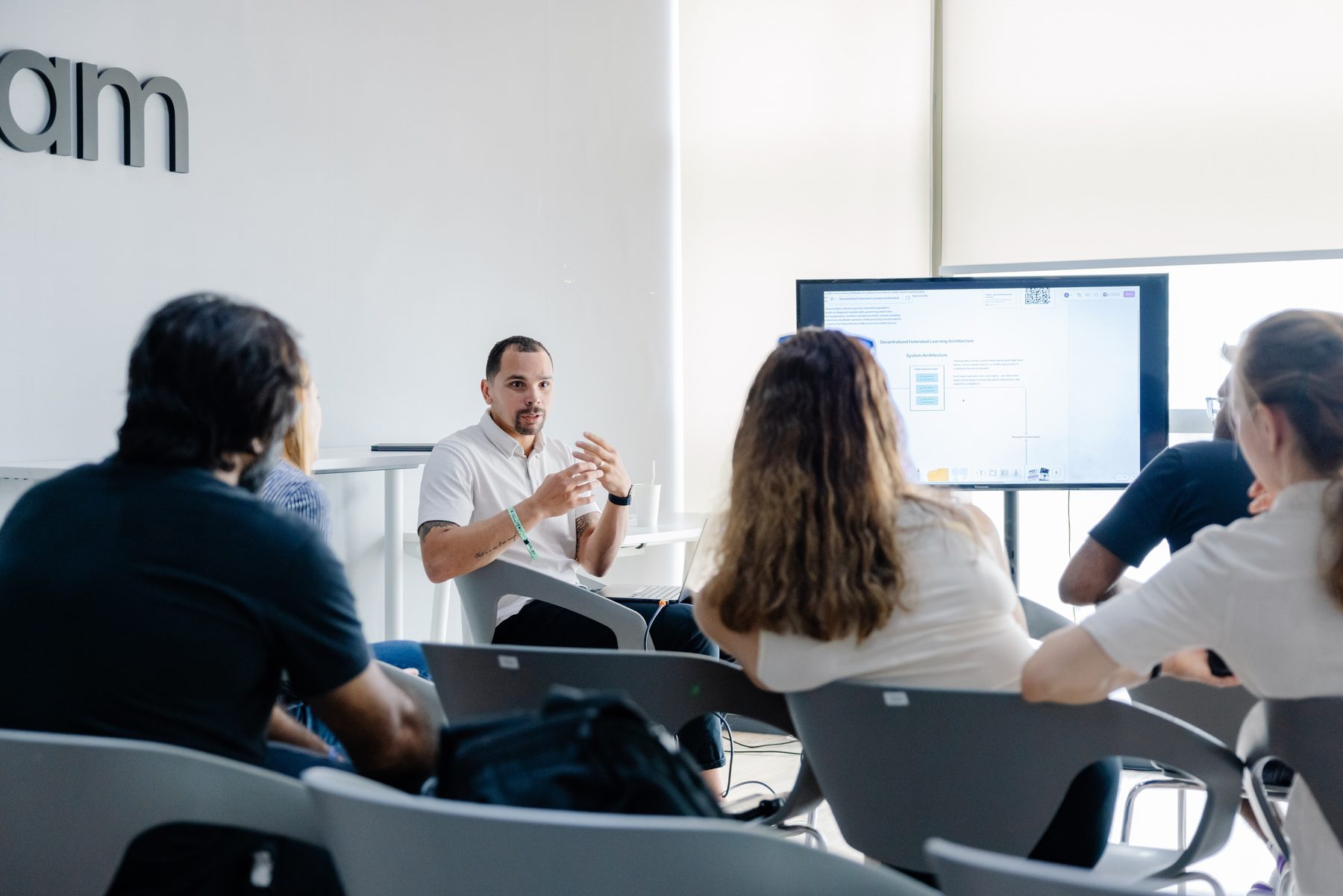
We help public agencies and philanthropies work out how to engage frontier technology, and who to build it with. We hold a seat on UNDP's Blockchain Advisory Group.
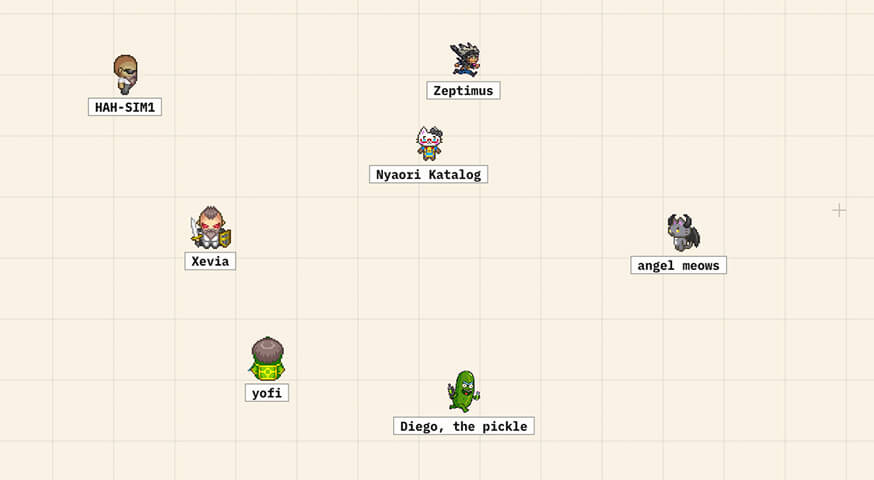
We use the network to run experiments and pilots and to scale the ones that hold, so new funding mechanisms get tested with real money rather than on paper. Where a question needs sustained attention, we convene a working group around it.
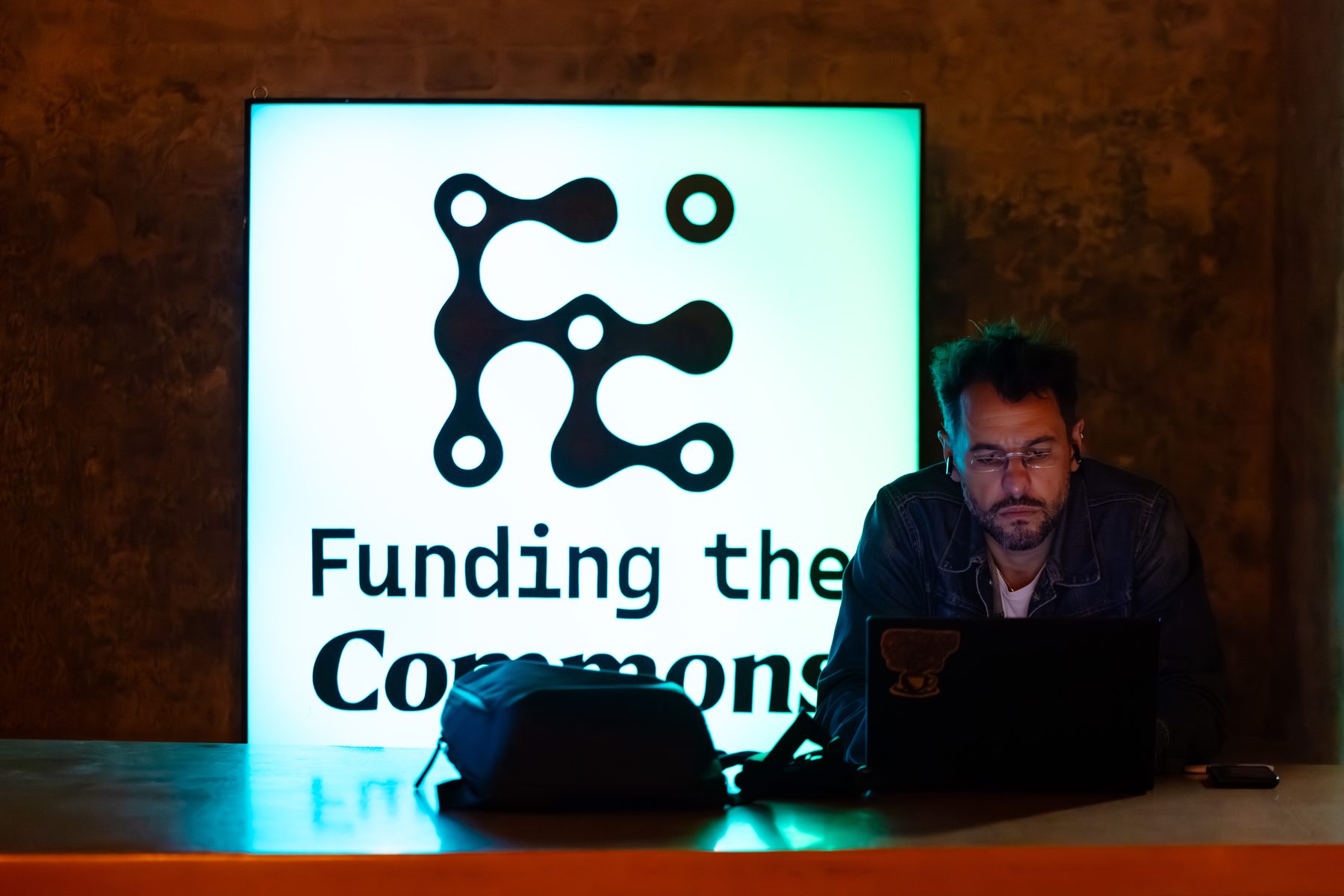
Essays, research reports, documentary films, and a long-form interview series, alongside a library of hundreds of recorded talks that anyone can watch.
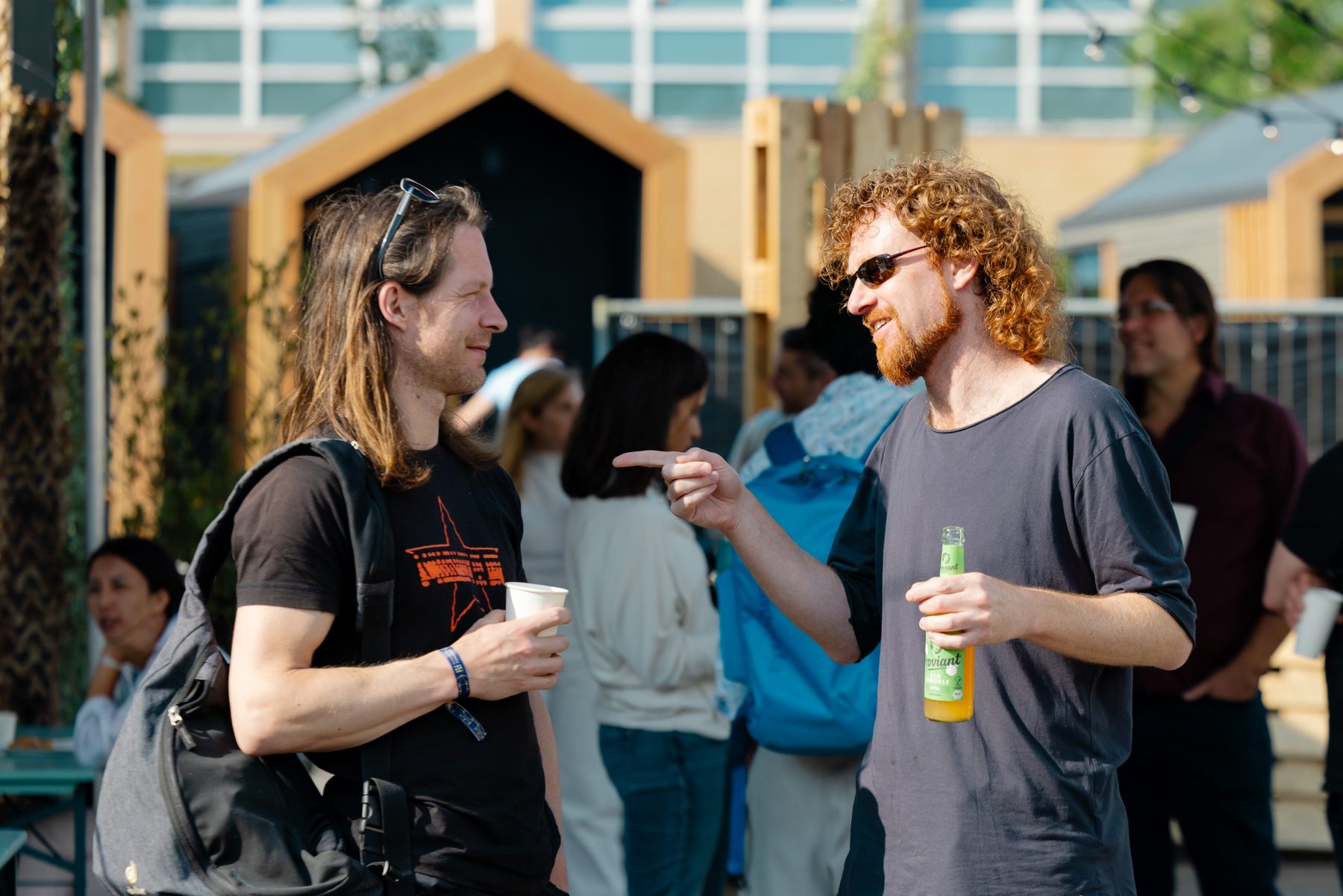
The introductions that change a trajectory rarely happen by accident. We put builders in front of the funders, institutions, and operators who can carry their work further, at dinners and in rooms built for it.

We act on what is early, contested, or unproven, and we do the reading first. The rigor is what earns the right to move ahead of consensus.
We say which parts are not working and which bets have stalled, because a field that publishes only its wins teaches nobody anything.
Ideas earn their place by being run rather than argued about, and we publish what we find so the next person can build on it.
Our program is chosen on its merits by our team. Sponsors can host sessions of their own.
A first-time builder gets the same preparation, framing, and stage time as the person whose name sold the tickets.
Funding the Commons began inside Protocol Labs in 2021, around a narrow question about how open-source builders could find the funders and researchers to keep their work alive. Protocol Labs is the innovation network Juan Benet grew out of IPFS and Filecoin, and it now connects more than 750 organizations working on open technology and digital human rights.
Five years on, that question has widened well past open-source software, into the systems that decide how value moves, who governs what we share, and how much say people get in either, questions that now run through AI itself. We became independent along the way, and the work grew with it: conferences on four continents, residencies and hackathons, funding campaigns run with organizations like the Tor Project, advisory work with public agencies and philanthropies, and the research and films that keep results on record.
All of it circles the same concern, which is whether the people working on these questions, spread as they are across governments, foundations, labs, and open-source communities, can work as one field rather than many.
The residencies produce the clearest examples. David Dao came through them, and Tomislav Mamić built the first quadratic funding mechanism for municipal public goods at our Berlin residency in 2023, where we gave it its first grant. It runs in Split now, and the city triple-matches what residents give to local green projects.
A few projects need more than a residency can give them, which is where Commons Lab comes in: incubation, institutional pilots, and a path to seed, run as a separate organization with its own team.
The infrastructure of the age of AI is being assembled right now, and it will shape how value moves, how shared resources are governed, and how the terms of common life get set. Whether it serves human agency depends less on any single piece than on whether the people building it, scattered across separate fields and institutions, can act as a coordinated whole.
Coordination is easy to treat as a soft value, a matter of goodwill and good habits, when in practice it behaves like infrastructure. Roads carry commerce and courts carry contract, and the conditions that let many separate minds act as one are what carry collective intelligence.
This has to be built while the work it supports is already underway, and no better moment is coming. What gets settled now is how widely the means to build with it are held.
So we bring people who work in parallel into the conditions to work in concert, and we shape the funding mechanisms that let communities back the open and sovereign systems they depend on.

Aza Raskin
Earth Species Project, Center for Humane Technology

Allison Duettmann
Foresight Institute

Illia Polosukhin
NEAR AI

Esben Kran
Apart Research

Juan Benet
Founder & CEO, Protocol Labs

David Dao
Co-founder and Chief Scientist, GainForest















David Casey
CEO
LinkedIn • X • davidcasey.me
David leads Funding the Commons, which convenes researchers, builders, and funders to work out better ways to sustain public goods. He has spent about fifteen years on one question: how communities fund, govern, and sustain what they share. He was the first Celo Scout, investing in early-stage fintechs in the Global South, and co-founded ReSource, a mutual credit protocol, and NuMundo, a travel platform connecting 1,000 hosts in 80 countries.

Kim Buisson
Partner
Kim is a partner at Funding the Commons. She builds its partnerships with funders and institutions and shapes how its work is told, so it reaches the people who can fund it, use it, and carry it further. She is also a co-founder and board member of Commons Lab, the incubator that grew out of this network. Before this, she spent fourteen years in brand strategy across L'Oréal Luxe, Chanel, and LVMH, including as Global Marketing Director for Kiehl's, and co-founded the creative agency Whooden/Studios.

Tereza Bízková
Head of Communications & Community
Tereza Bízková leads communications and community at Funding the Commons, where she sets the organization's voice and positioning and connects the funders, researchers, and builders who make up its community. She previously reported on technology and startups across Latin America and co-founded ReFi Medellín. She holds an MSc in Defence, Development and Diplomacy from Durham University.

Ira Nezhynska
Design Partner
Ira leads creative direction and event identity for Funding the Commons. She has sixteen years in branding, eight of them with web3 and open-source projects, and ran the internal brand studio at Protocol Labs. Her independent practice helps decentralized tech founders build their brands, for clients including Internet Archive, DWeb Camp, and Hypercerts.
David Dao
Co-founder and Chief Scientist, GainForest. Protocol Labs R&D. Three-time FtC resident, and part of the ETH BiodivX team that won a $250,000 prize as an XPRIZE Rainforest finalist.
“The residency itself is a wonderful example of what happens when you bring the right people into the right space at the right time. I often joke with my team that we have never been more productive than during these residencies.”
Aya Miyaguchi
President, Ethereum Foundation
“This type of event is great because it brings not just experts of technology but also the conversations that can happen at the intersections of different expertise. […] It’s something that anyone can be a part of.”
Jarrod Barnes
Former Head of Ecosystem, NEAR Foundation
“To have such a unique, talented, smart group of people all in one room, people from very different walks of life and organizations who deeply care about the mission and advancing the space forward, is incredible.”
Ken Suzuki
Co-founder and Executive Chair, SmartNews
“The Funding the Commons community brings together people to address some of the most universal and difficult challenges in the world. […] I believe the global community that gathers in different cities to address them plays a crucial role.”
We convene the people who decide how shared infrastructure gets funded, and we work with them in four ways. We run gatherings, from conferences and hackathons to builder residencies and small dinners. We advise public institutions and philanthropies working out how to engage frontier technology. We design participatory funding campaigns with the communities they serve. And we publish what comes out of all of it, from field reports to a library of talks anyone can watch.
The people in our rooms rarely share one anywhere else. Open-source engineers and founders sit with the funders who could back them, alongside economists and researchers working on how allocation actually behaves, policymakers and staff from institutions like UNDP and UNICEF, and the artists and writers who make this legible to everyone else. Since 2021 that has meant 27 gatherings across ten countries, more than 700 people on our stages, and a community of 25,000+ across our channels.
Our income comes from four places. Sponsors back individual gatherings. Our funding campaigns cover the staff and infrastructure that run them out of what they raise. Partners run rounds that we help design. Ticketing brings in the rest, which today sits under 10% of revenue.
We also take direct gifts from individuals who want this work to exist, and we would like that share to grow, because money that is not attached to one event or one round is what pays for the parts nobody sponsors: the research, the convening that has no commercial logic, and relationships we hold for years before they produce anything. If you want to talk about backing the work, write to David Casey at contact@fundingthecommons.io.
Funding the Commons began inside Protocol Labs in 2021 and runs independently now. Our program is chosen on its merits by our team, and sponsors can host sessions of their own. We hold positions on the work and stay neutral between the players, which is the only reason those players sit together. Commons Lab is a separate organization with its own team and its own site.
We open funding rounds rather than take grant applications. The rounds we run with partners, like the Internet Freedom Campaign with the Tor Project, let a community decide where the money goes, and anyone who fits the round can enter while it is open. We also relay what our partners are opening, because a lot of the money in this field never gets advertised widely. The newsletter and our social channels are where we announce a round in time for you to enter it.
We seat thirty to forty people around one table under Chatham House Rule, with a co-host who shares the question we are working on. Eight have run since 2024, in Zurich, San Francisco, Tokyo, Buenos Aires, and Paris, and the next one opens the Forum in San Francisco in November.
Builders spend several weeks working alongside other open-source teams, with mentorship, introductions, and time with funders who might back what they are building. Three cohorts have been through it: 110 builders, 88 projects, and $16.7M raised by alumni since. Applications open each year as a cohort is being formed, and we announce them through the newsletter.
No, and that is deliberate. Some work deserves to travel, so we record it and publish it for anyone to watch, which is how the library reached more than 400 talks. Other rooms exist for argument, and a camera changes what people are willing to say in them. At a moment when everything is recorded by default, protecting a few rooms is part of what our curation is for.
The gatherings, residencies, and dinners happen in person, and we run town halls and other online and hybrid formats through the year so that people who cannot travel still take part. Both feed the same community, and either is a reasonable place to start.
Often, yes. We work with photographers, filmmakers, designers, producers, and facilitators, and the ones who stay with us care about the subject as much as the craft. Send us what you have made, at contact@fundingthecommons.io.
Our events run on a roster of volunteers who set up rooms, meet speakers, run microphones, and keep two days moving. Write to contact@fundingthecommons.io to be added to the list, and we will be in touch when a gathering is near you.
Hear about gatherings, funding rounds, and residency applications:
Question not answered here? Write to contact@fundingthecommons.io.