Funders
Philanthropic foundations · venture · corporate · public sector
San Francisco
Bring the idea you want argued with. Two days at the Funding the Commons Forum with the 200 people who fund, build, and regulate what you work on.
Apply to speak About the Forum →The Funding the Commons Forum asks one question for two days: how the wealth of AI gets distributed, and who decides. Two hundred builders, researchers, funders, and policymakers come to San Francisco on 13–14 March 2027 to work on it, on a main stage that is on the record and in working rooms that are not.
A speaker here is not presenting to an audience. The person who can fund your mechanism is in the second row, the person who can regulate it is in the fifth, and the person who can break it is waiting for the questions. What gets said here gets picked up, tested, and carried out of the building.
If you have a position you want argued, a mechanism you want to run with the participants, or a result you would rather share off the record first, there is a room for it.
Two hundred seats, curated across four groups, so the funder, the builder, the regulator, and the researcher of one problem sit in the same room.
Philanthropic foundations · venture · corporate · public sector
Frontier startups · independent research groups · leading thinkers
United Nations · government officials · multilateral banks · nonprofits
Mechanism designers · economists · governance and alignment researchers

The form asks how you would like to run your session, and "open to whatever fits" is an answer.
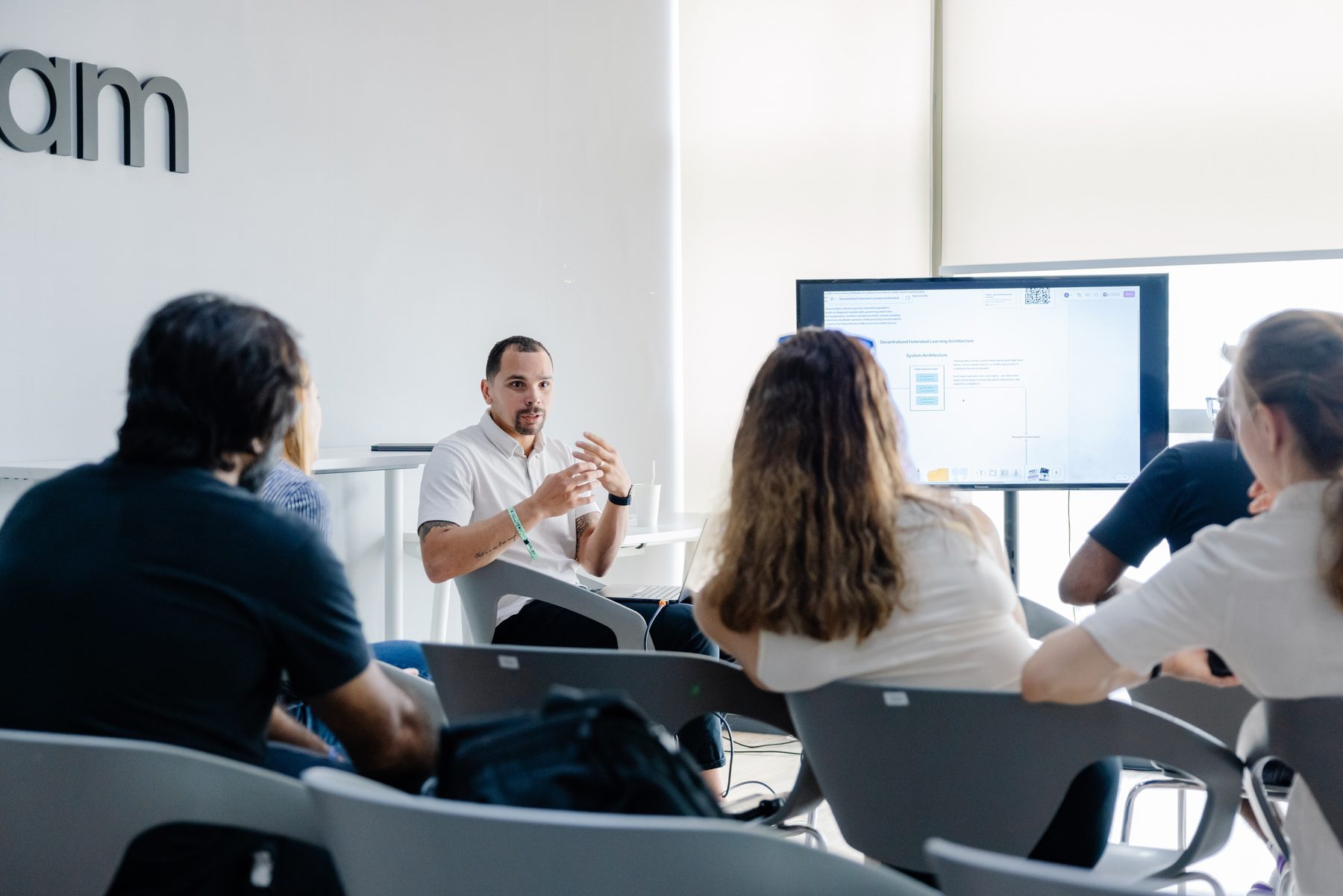
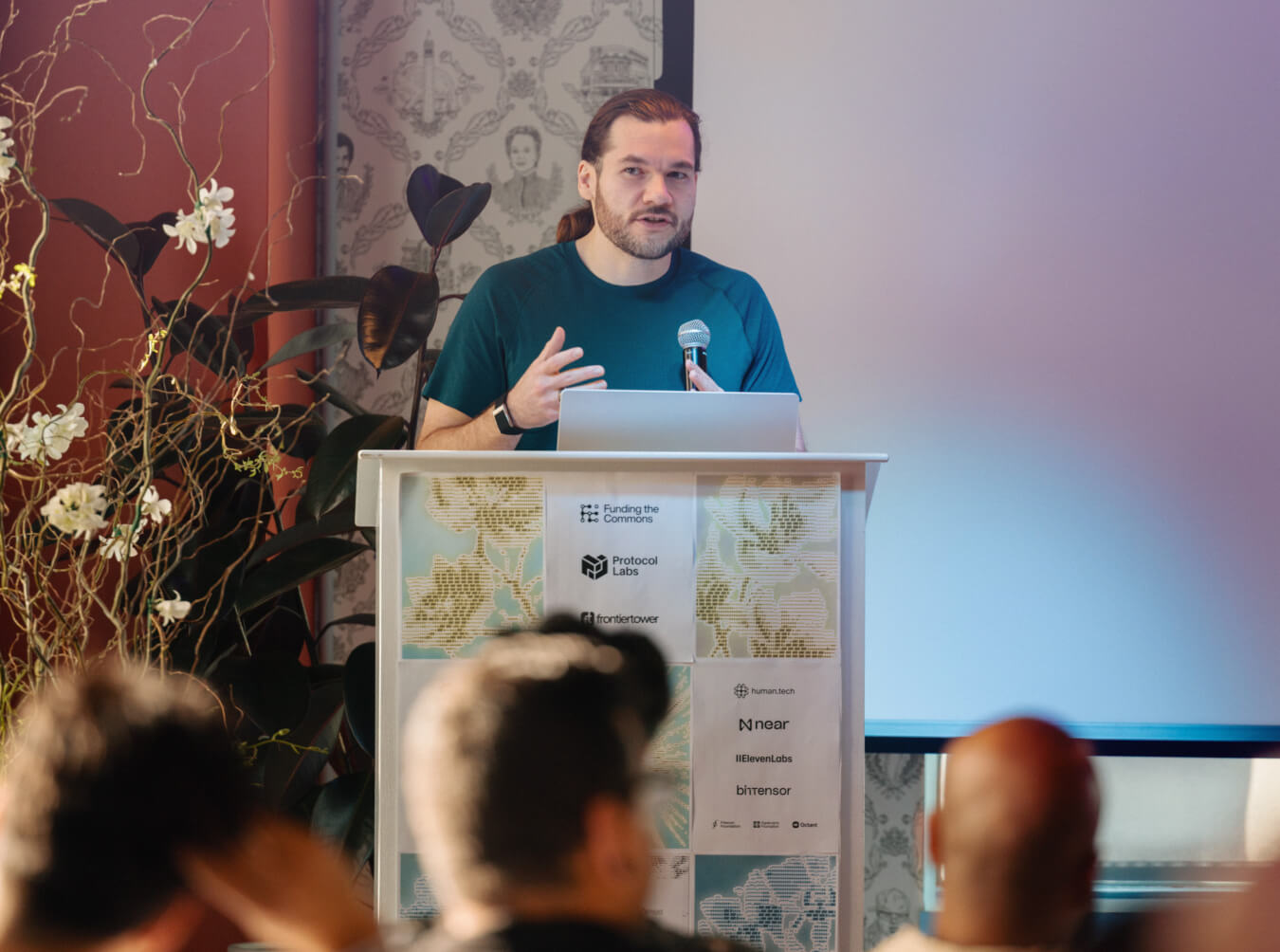
Keynote Panel Fireside chat Demo
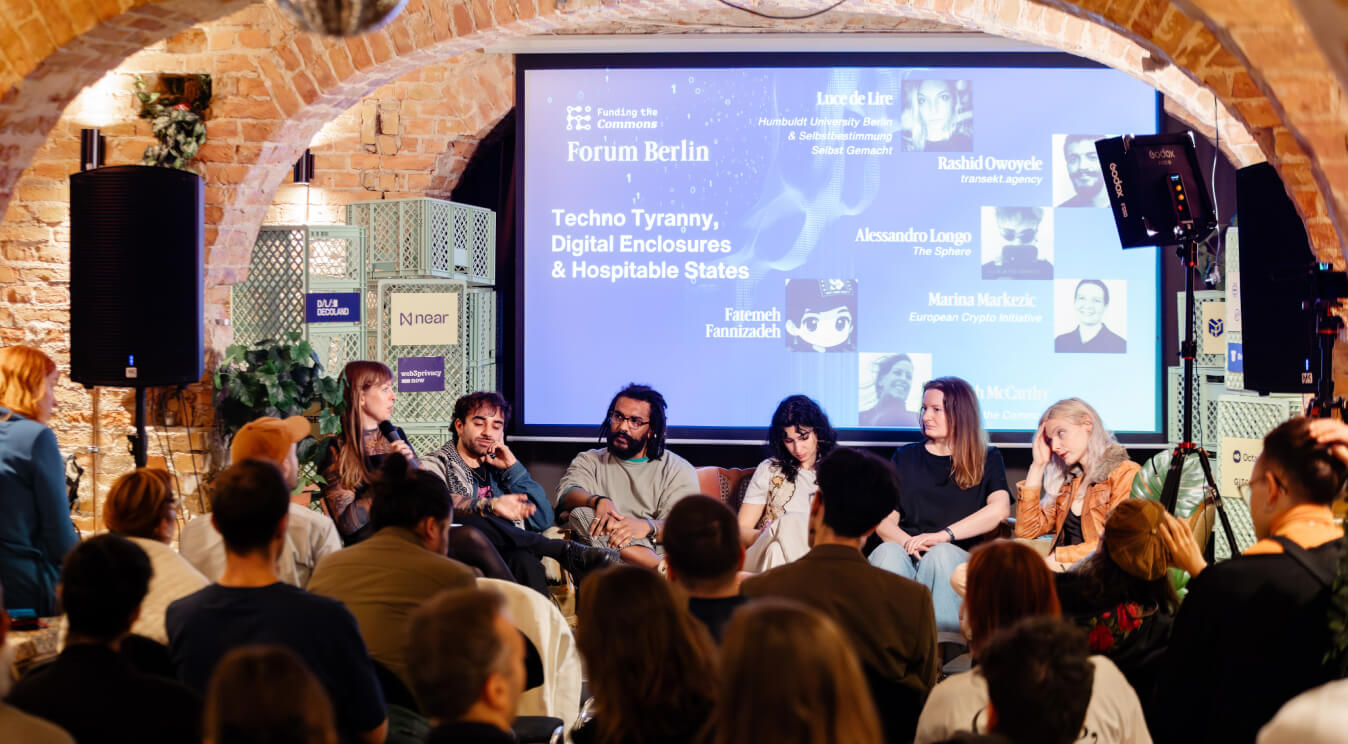
Short talks and conversations in front of the whole room, filmed in full and published on our YouTube channel and in the Library, where 410+ talks and conversations from past gatherings already live. You get a page in the speaker directory with every session you have given with us, and the recording is yours to share.

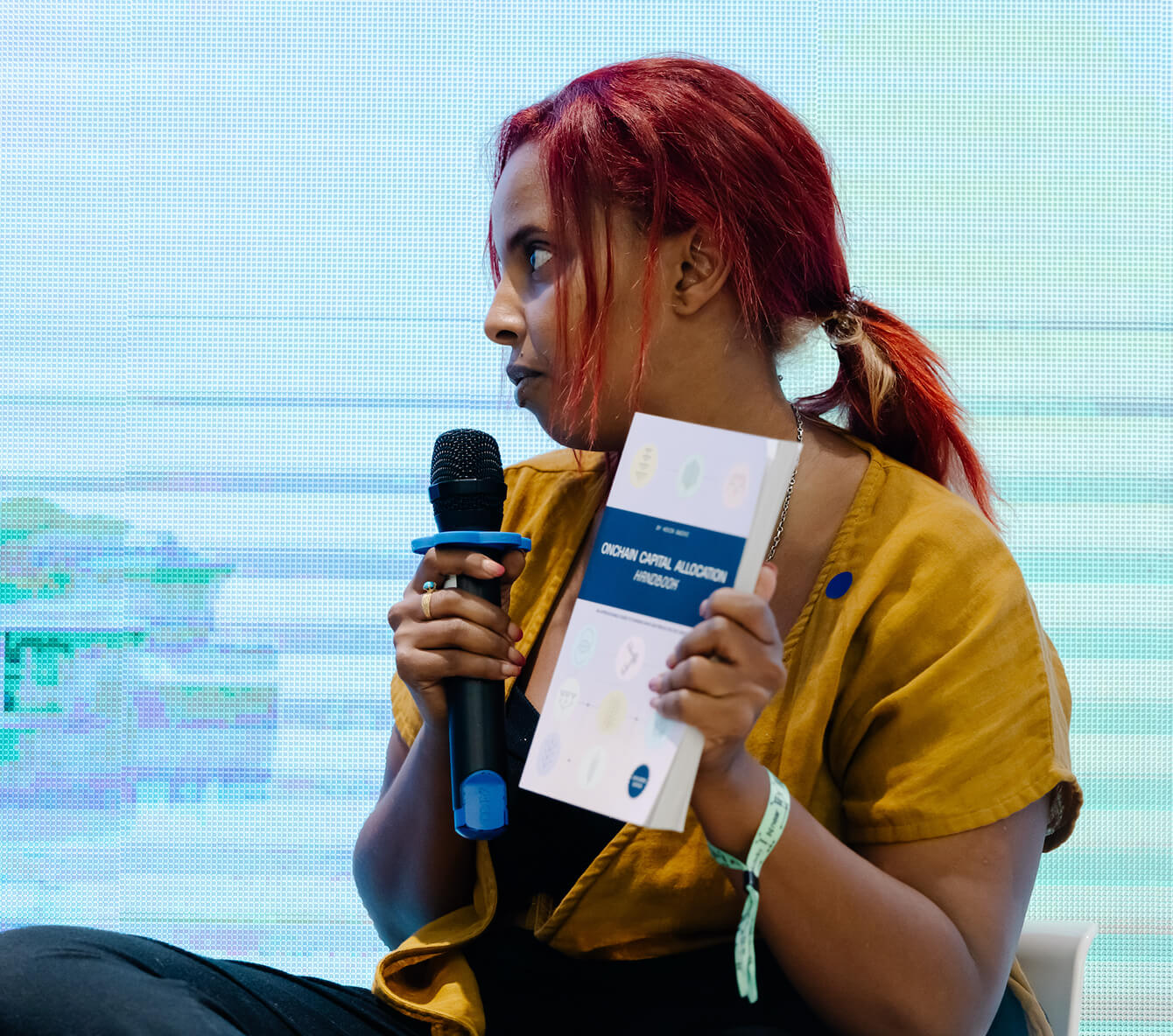
Workshop Fishbowl Sensemaking session Unconference Curated roundtable
Smaller rooms with space to disagree, under the Chatham House Rule: what is said can be used, who said it cannot. For the mechanism that is not ready to publish, the policy position you cannot yet say on a stage, and the problem you want twenty of the right people on.
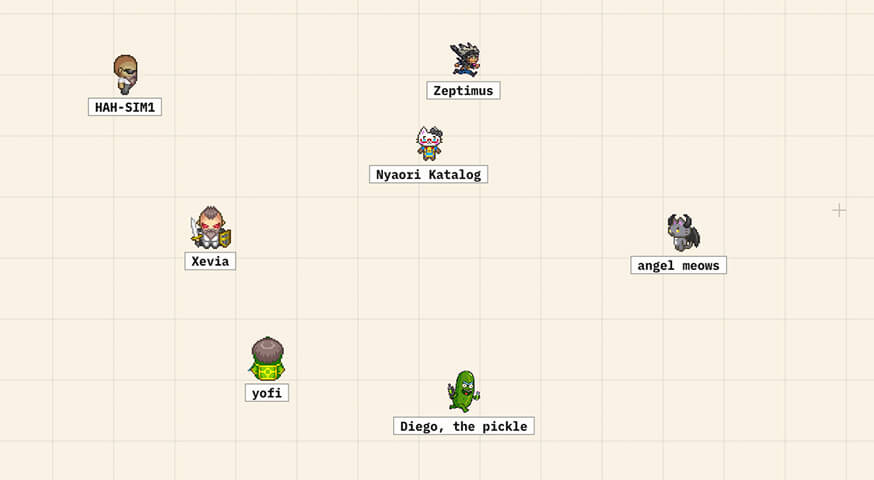
Funding round Vote Deliberation Prototype
Test a model, a mechanism, or a policy by running it with the participants, and have the results written up. In March 2026, six communities ran live treasuries across the conference, and the Governance Report that followed is the record of what worked.

Open Conversations are our interview series with the people reshaping how we build, 40+ published so far, and the mini-documentaries go deep on one idea. If you speak, you may be asked to sit down for one while you are in town.
Watch Open Conversations →Around the Forum, a curated dinner brings some of the speakers to one table with the funders and institutions in the room. Invitation only, no plus-ones, and nobody is quoted the next day.
Applications are open.
Apply to speakEvery session sits in one of two tracks. The full themes are on the Forum page; here is enough to place your proposal.
From economics to environmental science, this track asks what it will take for the gains of abundant intelligence to show up in everyday life, and to last.
This track turns to power: who builds and governs the new systems, and how they stay answerable to the people living with them, from cryptography to constitutional law.
A position. Tell us what you think is true, and who disagrees with you.
A question you want argued. A demo is welcome when the thing works and the question is what it changes.
Something ready to be tested by the people who would use it: a mechanism, a model, a policy, a result.
The room that fits it. Stage, working room, or experiment. If you are not sure, say so; the form has a box for that.
Ten minutes, one form.
Apply to speakThe room empties on Sunday evening. The recording, the directory page, the reports, and the network keep working.
410+
700+
40+
500K+
A long-form synthesis of what 1,000 attendees from 92 countries spent two days arguing about, building, and committing to.
Read the Field Report ↗
A floor-level audit of how six communities deployed live treasuries across the conference, with six governance mechanisms tested in parallel.
Read the Governance Report →
A test of whether AI-assisted deliberation can scale commons governance, with AI avatars of floor leads deliberating budget allocation alongside the human process.
Watch the documentary ↗
A few of the people who have spoken at our gatherings. Every name opens their page and their sessions.
A talk here is a beginning: the funder in the second row, the co-author in the fifth, the working session the next morning.
The form takes about ten minutes: who you are, a short bio and a headshot, the session you have in mind, how you would like to run it, which track it fits, and one question we ask everyone: if intelligence becomes abundant, what becomes precious?
San Francisco, 13–14 March 2027. Speakers are announced as they are confirmed.
Questions, or a session that does not fit the form: contact@fundingthecommons.io